UK curriculum coverage, Nursery to Year 5
Pompom Kids follows the English (England) primary curriculum: the Early Years Foundation Stage for Nursery and Reception, then the National Curriculum for Key Stage 1 and lower Key Stage 2. There are 58 games and 18 story books, all spoken aloud. Each game adapts to a child’s year group, so the same game asks more of a Year 4 child than of a Reception child. Below is every game for each year and exactly what it practises.
By subject: phonics, reading, spelling and grammar, maths.
Nursery (FS1) · age 3–4
Each game below changes its difficulty to match Nursery (FS1). Aim for about 5 minutes a day, little and often.
Reading and writing this year
- Listening comes before letters: play "what can you hear?" on walks, copy clapping rhythms, and enjoy silly rhymes.
- Say words in sounds and let your child guess them: "Where is your h-a-t?" This is oral blending, the first step towards reading.
- Share stories every day and talk about the pictures. New words come from chatting, not drilling.
Maths this year
- Notice small amounts without counting: "I can see two ducks!" (this is called subitising).
- Count things you can touch — stairs, grapes, socks — pointing to each one once. The last number says how many.
- Use "more" and "fewer" when sharing snacks, and talk about shapes you spot around the house.
Sound Garden · Listening, letters and phonics
 Rhyme Time Phonics: Phase 1 listening Free
Hear and pick out rhyming words (Phase 1 aspect 4: rhythm and rhyme). Same Sound Snap Phonics: Phase 1 listening Members
Hear that words can start with the same sound (alliteration). Letter Garden Phonics: grapheme–phoneme correspondences Free
Meet the first letters (s a t p) through sound and picture — no pressure to write. Robot Talk Phonics: Phase 1 oral blending Free
Orally blend two or three spoken sounds into a familiar word and match it to a picture (Phase 1, aspect 7: voice sounds). Syllable Drum Phonics: Phase 1 listening Free
Tap the beats (syllables) in spoken words of one to three syllables (Phase 1 aspect 4: rhythm and rhyme). Silly Soup Phonics: Phase 1 listening Members
Pick out two words that start with the same sound from four pictures (Phase 1 aspect 5: alliteration).
Counting Hill · Counting, seeing numbers and bonds
 Count & Tap Number: counting Free
Count up to 5 objects, touching each once (one-to-one correspondence). Quick Look Number: subitising Free
See up to 3 at a glance without counting.
Shape Park · Shapes, patterns, time, money and measures
 Shape Hunt Geometry: properties of shapes Free
Match shapes that are the same, noticing shape rather than colour (EYFS: shape and spatial reasoning). Pattern Train Patterns: repeating and growing Members
Continue a simple AB repeating pattern of colours and shapes (EYFS: talk about and continue patterns).
Music Meadow · Listening, rhythm and making music
 Copy the Beat Music: rhythm and pulse Free
Listen to and copy 2 or 3 beats on one drum (Phase 1 aspect 2: instrumental sounds). Sound Detective Phonics: Phase 1 listening Members
Listen to and identify four instruments by their sound alone (Phase 1 aspect 2: instrumental sounds). High or Low? Music: pitch Members
Hear the difference between very high and very low sounds. Melody Maker Music: composing Free
Explore sounds freely, finding at least three different notes (EYFS: Expressive Arts and Design).
Reception (FS2) · age 4–5
Each game below changes its difficulty to match Reception (FS2). Aim for about 10 minutes a day, little and often.
Reading and writing this year
- Daily phonics starts now. Children learn one sound for each letter, then sounds made by two letters (sh, ee, oa…).
- Say sounds short and pure — "mmm", not "muh". Adding "uh" makes blending much harder.
- Books sent home should only use sounds your child already knows. Re-reading the same book builds speed and confidence — that is a good thing!
- Tricky words (the, said, was) have one "tricky bit". Point it out rather than asking your child to memorise the whole shape.
Maths this year
- Know numbers to 10 deeply: what 5 looks like, that 5 is 4 and 1, or 3 and 2.
- See amounts up to 5 at a glance, and learn number bonds to 5 by heart, then some to 10.
- Count beyond 20, spot odd and even numbers with pairs of socks, and share things fairly.
Sound Garden · Listening, letters and phonics
- Rhyme Time Phonics: Phase 1 listening Free
Recognise and supply rhymes before and alongside Phase 2 letters. - Same Sound Snap Phonics: Phase 1 listening Members
Isolate the initial sound in a spoken word, ready to match it to a letter. - Letter Garden Phonics: grapheme–phoneme correspondences Free
Learn each new Phase 2–3 GPC in teaching order; form the letter correctly.  Sound Buttons Phonics: blending to read Free
Blend sounds in CVC words using only taught GPCs (ELG: Word Reading). Word Builder Phonics: segmenting to spell Members
Segment CVC words into sounds and choose a grapheme for each. Tricky Word Pop Phonics: common exception words Members
Read the Phase 2–3 tricky words (the, to, I, no, go…).- Robot Talk Phonics: Phase 1 oral blending Free
Orally blend CVC and four-sound words (adjacent consonants), choosing between pictures that share sounds — ready for reading words (ELG: Word Reading).  Sound Pairs Phonics: grapheme–phoneme correspondences Free
Match each taught Phase 2–3 grapheme to its sound picture, remembering where cards are (ELG: say a sound for each letter and some digraphs). Alphabet Train Phonics: letter names and the alphabet Members
Say the names of lower-case letters and find the missing letter in a run of the alphabet, a to z. Sound Fishing Phonics: recognising graphemes in words Members
Find a taught letter or digraph inside short decodable words (6 fish, 2–3 to catch), reading each word to check (ELG: Word Reading).- Syllable Drum Phonics: Phase 1 listening Free
Split spoken words of up to four syllables into beats, ready for oral segmenting (Phase 1 aspect 7). - Silly Soup Phonics: Phase 1 listening Members
Find two or three words that share a first sound from six pictures, ready to link sounds to letters (Phase 1 aspect 5).
Story Tree · Books to read and talk about
 Yes or No? Reading: comprehension of decodable sentences Free
Read simple decodable questions (Can a cat nap?) using Phase 2–3 GPCs and tricky words, and show understanding with yes or no (ELG: read aloud simple sentences consistent with phonic knowledge). Caption Match Reading: comprehension of decodable captions Members
Read a short decodable caption (a big pig in a box) and choose the picture that matches every word, where the others differ by one detail (ELG: read aloud simple phrases consistent with phonic knowledge). Story Tree Reading: fluency and comprehension Free
Read decodable books matched to known sounds; talk about what happened. Story Order Reading: comprehension (sequencing) Members
Listen to a short story and put three pictures in order (EYFS ELG Comprehension: retell stories).
Counting Hill · Counting, seeing numbers and bonds
- Count & Tap Number: counting Free
Count up to 10 objects; the last number says how many (cardinality). - Quick Look Number: subitising Free
Subitise up to 5 and recognise dice and ten-frame patterns.  Make Ten Number: number bonds Members
Know number bonds to 5 and some to 10 (ELG: Number). Hop the Line Number: number lines, addition and subtraction Free
Count along a 0–10 number line to find where a number is (ELG: Number, counting and number sense). Hungry Croc Number: comparing numbers Free
Compare two groups up to 10 (more, fewer or the same) and find one more or one less than a number (ELG: Number).
Shape Park · Shapes, patterns, time, money and measures
- Shape Hunt Geometry: properties of shapes Free
Name circles, triangles, squares and rectangles of any size, even when they are turned (ELG: Number and shape). - Pattern Train Patterns: repeating and growing Members
Continue, copy and correct ABB, AAB and ABC repeating patterns, spotting the mistake (ELG: Numerical Patterns).  Piggy Shop Measurement: money Free
Recognise 1p, 2p, 5p and 10p coins, whatever their size or way up. Treasure Map Geometry: position and direction Members
Understand position through words: on, under, in, next to, behind and in front of (EYFS: spatial reasoning).
Music Meadow · Listening, rhythm and making music
- Copy the Beat Music: rhythm and pulse Free
Copy a 4-beat pattern on two drums in the right order (EYFS ELG: Being Imaginative and Expressive). - Sound Detective Phonics: Phase 1 listening Members
Identify six instruments by sound, and say whether a sound is loud or quiet, fast or slow (EYFS: Expressive Arts and Design). - High or Low? Music: pitch Members
Say whether a second note is higher or lower than the first. - Melody Maker Music: composing Free
Make a simple pattern of sounds and repeat it (EYFS ELG: Being Imaginative and Expressive).
Year 1 · age 5–6
Each game below changes its difficulty to match Year 1. Aim for about 10 minutes a day, little and often.
Reading and writing this year
- New ways to spell sounds you already know: ay, ou, ie, ea, and "split digraphs" like a-e in cake.
- In June there is the Phonics Screening Check: 40 words, some of them "alien" nonsense words, read one-to-one with a teacher.
- Alien words check real decoding — practise them for fun, never as a test. Our Real or Alien? game helps.
- Keep reading aloud to your child too: stories bigger than they can read alone grow vocabulary.
Maths this year
- Count to 100 and back; count in 2s, 5s and 10s.
- Number bonds to 10 and then 20; adding and subtracting within 20.
- Halves and quarters of shapes and amounts; o’clock and half past.
Sound Garden · Listening, letters and phonics
- Letter Garden Phonics: grapheme–phoneme correspondences Free
Secure Phase 3 digraphs and learn Phase 5 alternative graphemes. - Sound Buttons Phonics: blending to read Free
Blend words with digraphs, adjacent consonants and split digraphs (NC Y1 Word Reading). - Word Builder Phonics: segmenting to spell Members
Spell words with digraphs and adjacent consonants using taught GPCs. - Tricky Word Pop Phonics: common exception words Members
Read Y1 common exception words, noticing the tricky part.  Real or Alien? Phonics: decoding (Phonics Screening Check) Members
Decode real and pseudo-words using all taught GPCs, as in the Phonics Screening Check.- Sound Pairs Phonics: grapheme–phoneme correspondences Free
Recall digraphs, trigraphs, split digraphs and Phase 5 graphemes quickly by matching each to its sound picture (NC Y1: respond speedily with the correct sound). - Alphabet Train Phonics: letter names and the alphabet Members
Name the letters of the alphabet in order, say which letter comes before or after another, and match capital letters to lower-case letters (NC Y1 Spelling: name the letters of the alphabet in order).  Which Spelling? Phonics: Phase 5 alternative spellings Members
Choose between the common spellings of a vowel sound (ai/ay/a-e, ee/ea/e-e/ey, igh/ie/i-e/y, oa/ow/o-e/oe, oo/ue/ew/u-e, ur/ir/er, or/aw/au) to spell a pictured, decodable word (NC Y1 Spelling). Sound Sort Phonics: Phase 5 alternative spellings Members
Read words with the same vowel sound and sort them into two baskets by how the sound is spelt (ai/ay, ee/ea, oi/oy…), noticing where each spelling sits in a word.- Sound Fishing Phonics: recognising graphemes in words Members
Spot digraphs, trigraphs and Phase 5 graphemes inside longer decodable words among 8 fish, without being fooled by look-alike letters (a in rain is part of ai) (NC Y1: read accurately by blending taught GPCs).
Story Tree · Books to read and talk about
- Yes or No? Reading: comprehension of decodable sentences Free
Read questions with adjacent consonants, digraphs and tricky words, and check that the sentence makes sense (NC Y1: check that the text makes sense while reading). - Caption Match Reading: comprehension of decodable captions Members
Read longer captions with blends and position words (three ducks under a bus, a cat and a frog next to a tent) and match every detail (NC Y1: read accurately and check the text makes sense). - Story Tree Reading: fluency and comprehension Free
Read decodable books fluently; answer simple retrieval and inference questions. - Story Order Reading: comprehension (sequencing) Members
Read decodable captions and put four events of a story in order (KS1 reading: discuss the sequence of events).
Counting Hill · Counting, seeing numbers and bonds
- Count & Tap Number: counting Free
Count up to 20 objects accurately and reliably. - Quick Look Number: subitising Free
Recognise amounts to 10 using ten-frame structure (5 and a bit). - Make Ten Number: number bonds Members
Recall number bonds to 10 and 20 (NC Y1 Addition and Subtraction). - Hop the Line Number: number lines, addition and subtraction Free
Add and subtract one-digit numbers within 20 by counting on and back on a number line. - Hungry Croc Number: comparing numbers Free
Compare numbers to 20 using <, > and =, seeing them as tens and ones.  Doubles & Halves Number: doubling and halving Members
Double numbers to 5 (totals to 10) and find half of even numbers to 20 by sharing into two equal groups.
Times Tower · Times tables, sharing and factors
 Share the Sweets Division: sharing and grouping Members
Solve division problems by sharing objects equally between 2 or 4 (concrete objects and pictures).
Block Quarry · Place value, calculating and rounding
 Block Builder Place value Free
Represent numbers to 20 as tens and ones.
Fraction Café · Fractions, decimals and percentages
 Fraction Café Fractions: parts of a whole Free
Recognise a half and a quarter of a shape.
Word Workshop · Spelling, grammar and punctuation
 Punctuation Pop Grammar: punctuation Free
Punctuate sentences with a full stop, question mark or exclamation mark (NC Y1). Capital Catcher Grammar: capital letters Members
Use a capital letter to start a sentence, for names, for the days of the week and for the pronoun I (NC Y1). Suffix Factory Spelling: suffixes Members
Add -s, -es, -ing, -ed, -er and -est where no change is needed to the root word (NC Y1). Spelling Hive Spelling: statutory word lists Free
Spell the Y1 common exception words and the days of the week (NC Y1).
Shape Park · Shapes, patterns, time, money and measures
- Shape Hunt Geometry: properties of shapes Free
Recognise and name common 2-D shapes (rectangles, circles, triangles, pentagons, hexagons) and 3-D shapes (cubes, cuboids, pyramids, spheres, cylinders, cones). - Pattern Train Patterns: repeating and growing Members
Continue growing patterns and number patterns, counting forwards and backwards in 2s, 5s and 10s (NC Y1 Number).  Tick-Tock Clock Measurement: time Free
Tell the time to the hour and half past the hour, and draw the hands on a clock face to show these times.- Piggy Shop Measurement: money Free
Recognise coins and pay exact amounts up to 20p by combining coins.  Measure Up Measurement: length, mass and capacity Members
Compare lengths, masses and capacities (longer/shorter, heavier/lighter, fuller/emptier); measure in whole centimetres and read a scale marked in 1s.- Treasure Map Geometry: position and direction Members
Describe position, direction and movement: moving forward, and making quarter, half and three-quarter turns to the left and right.
Music Meadow · Listening, rhythm and making music
- Copy the Beat Music: rhythm and pulse Free
Copy short rhythms with rests on two drums, keeping the timing (KS1 music: rhythm). - High or Low? Music: pitch Members
Recognise whether a tune is moving up or down in pitch (KS1 music: pitch). - Melody Maker Music: composing Free
Make a tune that climbs in pitch step by step, while the beat lights show the steady pulse (KS1 music: pitch and pulse).
Year 2 · age 6–7
Each game below changes its difficulty to match Year 2. Aim for about 15 minutes a day, little and often.
Reading and writing this year
- Reading should start to sound smooth. Re-reading a favourite page aloud is great fluency practice.
- Talk about books: why did the character do that? What might happen next? How do you know?
- Spelling moves on to endings like -ment, -ness, -ful and -ly.
Maths this year
- Place value to 100: 47 is 4 tens and 7 ones.
- Know the 2, 5 and 10 times tables, and use number bonds to 20 to work out facts to 100 (3 + 4 = 7, so 30 + 40 = 70).
- Fractions: ½, ⅓, ¼ and ¾ of shapes and amounts; telling time to 5 minutes.
Sound Garden · Listening, letters and phonics
- Word Builder Phonics: segmenting to spell Members
Segment longer words into phonemes and choose correct graphemes. - Tricky Word Pop Phonics: common exception words Members
Read Y2 common exception words quickly and accurately. - Real or Alien? Phonics: decoding (Phonics Screening Check) Members
Re-secure decoding for children re-taking the Phonics Screening Check. - Which Spelling? Phonics: Phase 5 alternative spellings Members
Spell words using less common alternatives too (ey in grey, ie in thief, ou in soup, ear in learn, ar in warm, ear in bear), choosing from up to four spellings without a picture (NC Y2: segment words and represent phonemes by graphemes, learning new ways of spelling phonemes). - Sound Sort Phonics: Phase 5 alternative spellings Members
Sort words into three spelling baskets, including less common spellings (ey, ie, ou, ear, ar), and use position patterns (ay and oy at the end) to help spell (NC Y2 Spelling).
Story Tree · Books to read and talk about
- Yes or No? Reading: comprehension of decodable sentences Free
Read longer questions with Phase 5 spellings fluently and answer from general knowledge, spotting silly ones (NC Y2: check that text makes sense, read accurately without overt sounding). - Story Tree Reading: fluency and comprehension Free
Read with expression; answer retrieval, inference and vocabulary questions. - Story Order Reading: comprehension (sequencing) Members
Order four events and retell them with first, next, then and finally (KS1: sequencing with time words).
Counting Hill · Counting, seeing numbers and bonds
- Make Ten Number: number bonds Members
Recall and use bonds to 20 fluently and derive bonds to 100. - Hop the Line Number: number lines, addition and subtraction Free
Add and subtract multiples of 10 to and from a 2-digit number, jumping in tens on a number line. - Hungry Croc Number: comparing numbers Free
Compare numbers to 100 using <, > and =, using tens and ones (base-10) to decide. - Doubles & Halves Number: doubling and halving Members
Recall doubles to double 10 and halves to 20, and double and halve multiples of 5 and 10 to 50.
Times Tower · Times tables, sharing and factors
 Times Tables Garden Multiplication: times tables Free
Recall ×2, ×5 and ×10 facts using arrays.- Share the Sweets Division: sharing and grouping Members
Calculate division facts for the 2, 5 and 10 times tables, by sharing (÷2) and grouping (÷5, ÷10), and write them with ÷ and =.
Block Quarry · Place value, calculating and rounding
- Block Builder Place value Free
Know the value of each digit in a 2-digit number.
Fraction Café · Fractions, decimals and percentages
- Fraction Café Fractions: parts of a whole Free
Recognise 1/3, 1/4, 2/4 and 3/4 of a shape.
Word Workshop · Spelling, grammar and punctuation
- Punctuation Pop Grammar: punctuation Free
Use full stops, question marks and exclamation marks (What…! How…!) and commas to separate items in a list (NC Y2). - Capital Catcher Grammar: capital letters Members
Use capital letters for sentence starts, names, I, days, months and places (proper nouns) (NC Y2).  Word Sorter Grammar: word classes Members
Identify nouns, verbs and adjectives in a sentence (NC Y2 word classes). Joining Words Grammar: conjunctions and adverbials Members
Join clauses with and, but, or (coordination) and because, when, if, that (subordination) (NC Y2).- Suffix Factory Spelling: suffixes Members
Add suffixes by doubling, dropping e or changing y to i, and add -ful, -less, -ment, -ness and -ly (NC Y2).  Homophone Hunt Spelling: homophones Free
Distinguish between homophones and near-homophones such as there/their/they’re, to/too/two and see/sea (NC Y2).- Spelling Hive Spelling: statutory word lists Free
Spell the Y2 common exception words, e.g. because, children, people (NC Y2).
Shape Park · Shapes, patterns, time, money and measures
- Shape Hunt Geometry: properties of shapes Free
Identify the number of sides and vertices of 2-D shapes, and faces, edges and vertices of 3-D shapes. - Tick-Tock Clock Measurement: time Free
Tell and show the time to five minutes, including quarter past and quarter to the hour. - Piggy Shop Measurement: money Free
Combine coins and notes to pay amounts in pounds (£) and pence (p), and find different combinations that make the same amount. - Measure Up Measurement: length, mass and capacity Members
Read rulers in cm, and scales and jugs going up in 2s, 5s and 10s (kg, g, ml); compare measures using <, > and =.  Mirror Painter Geometry: symmetry Members
Complete a symmetric pattern on a grid with a vertical mirror line. Chart Explorer Statistics: charts and tables Members
Interpret simple pictograms, tally charts and tables; answer questions by counting and comparing, and find totals of two groups.- Treasure Map Geometry: position and direction Members
Order and arrange a sequence of moves (a simple program of forward steps and quarter turns) to follow a route.
Music Meadow · Listening, rhythm and making music
- Copy the Beat Music: rhythm and pulse Free
Copy longer rhythms with rests on three drums, keeping the order and timing (KS1 music: rhythm and pulse). - High or Low? Music: pitch Members
Match a three-note tune to a drawn pitch shape, an early step towards notation (KS1 music: pitch). - Melody Maker Music: composing Free
Make a tune that starts high and ends low, and choose its speed (KS1 music: pitch and tempo).
Year 3 · age 7–8
Each game below changes its difficulty to match Year 3. Aim for about 15 minutes a day, little and often.
Reading and writing this year
- Reading to learn: non-fiction, poems and longer stories. Ask "how do you know?" to grow inference skills.
- Use word parts to work out new words (un-, re-, -ful, -less).
- Let your child choose books for pleasure — comics and magazines count!
Maths this year
- Place value to 1,000 and column addition and subtraction.
- The 3, 4 and 8 times tables (double the 2s to get the 4s, double again for the 8s).
- Unit and non-unit fractions, tenths, and equivalent fractions using pictures.
Story Tree · Books to read and talk about
- Story Tree Reading: fluency and comprehension Free
Read longer texts; explain characters’ feelings using evidence.
Counting Hill · Counting, seeing numbers and bonds
- Hop the Line Number: number lines, addition and subtraction Free
Add and subtract ones across a hundred boundary by partitioning the jump (bridge through 100). - Hungry Croc Number: comparing numbers Free
Compare numbers to 1,000 using <, > and =, looking at hundreds, then tens, then ones. - Doubles & Halves Number: doubling and halving Members
Double and halve multiples of 10 and 100 (to 1,000) using known facts and place value.
Times Tower · Times tables, sharing and factors
- Times Tables Garden Multiplication: times tables Free
Recall ×3, ×4 and ×8 facts. - Share the Sweets Division: sharing and grouping Members
Divide by 3, 4 and 8 by sharing and grouping, seeing remainders as the sweets left over.
Block Quarry · Place value, calculating and rounding
- Block Builder Place value Free
Know the value of each digit in a 3-digit number.  Column Calculator Addition and subtraction: formal written methods Free
Add and subtract numbers with three digits using columnar addition and subtraction, exchanging between columns. Rounding Rollercoaster Number: rounding Members
Round numbers to 1,000 to the nearest 10 and the nearest 100, using the halfway point on a number line.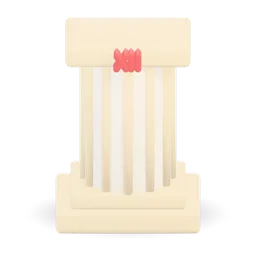 Roman Road Number: Roman numerals Members
Tell and write Roman numerals from I to XII on a clock face.
Fraction Café · Fractions, decimals and percentages
- Fraction Café Fractions: parts of a whole Free
Recognise unit and non-unit fractions with small denominators. 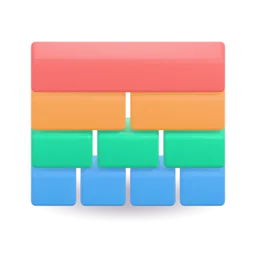 Fraction Wall Fractions: equivalence and comparison Members
Recognise equivalent fractions with small denominators using diagrams.
Word Workshop · Spelling, grammar and punctuation
- Punctuation Pop Grammar: punctuation Free
Use and punctuate direct speech with inverted commas, alongside end punctuation and list commas (NC Y3). - Word Sorter Grammar: word classes Members
Sort nouns, verbs, adjectives and adverbs, including adverbs of time and manner (NC Y3). - Joining Words Grammar: conjunctions and adverbials Members
Express time, place and cause with conjunctions such as while, before, after, where, so and although (NC Y3). - Suffix Factory Spelling: suffixes Members
Spell words ending -ation and -ous, and add -ly to words ending le, ic and y (NC Y3–4). - Homophone Hunt Spelling: homophones Free
Spell homophones from the Y3–4 list such as break/brake, meet/meat and piece/peace (NC Y3). - Spelling Hive Spelling: statutory word lists Free
Spell words from the Y3–4 statutory list, starting with the shorter ones (e.g. answer, believe, heart) (NC Y3).  Shades of Meaning Vocabulary: synonyms and word choice Members
Order three related words by strength (warm, hot, scorching) to build vocabulary for writing. Prefix Power Spelling and vocabulary: prefixes Members
Use the prefixes un-, dis-, mis-, re- and pre- to make words with new or opposite meanings (NC Y3–4).
Shape Park · Shapes, patterns, time, money and measures
- Shape Hunt Geometry: properties of shapes Free
Identify right angles in shapes, and recognise horizontal, vertical, parallel and perpendicular lines. - Tick-Tock Clock Measurement: time Free
Tell and set the time to the nearest minute on an analogue clock, including clocks with Roman numerals I to XII. - Piggy Shop Measurement: money Free
Add and subtract amounts of money to give change, counting on from the price, using both £ and p. - Measure Up Measurement: length, mass and capacity Members
Measure in cm and mm (including from a non-zero start), read scales in steps of 5, 10 and 100 g or ml, and compare mixed units. - Mirror Painter Geometry: symmetry Members
Complete symmetric patterns with a vertical or a horizontal mirror line, painting more squares. - Chart Explorer Statistics: charts and tables Members
Interpret pictograms where one picture stands for 2 or 5, bar charts and tables; solve one-step “how many more” and total questions. - Treasure Map Geometry: position and direction Members
Plan longer programmed routes with right-angle turns that go around obstacles.  Angle Eater Geometry: angles Members
Recognise angles as a property of shape or a description of a turn; identify right angles and whether angles are greater or less than a right angle; know that 2 right angles make a half turn and 4 a whole turn.
Music Meadow · Listening, rhythm and making music
- Melody Maker Music: composing Free
Compose a pentatonic tune with at least three notes and repeat it to give it structure (KS2 music: compose).
Year 4 · age 8–9
Each game below changes its difficulty to match Year 4. Aim for about 15 minutes a day, little and often.
Reading and writing this year
- Build stamina: longer chapters, and talk about why the author chose particular words.
- Summarise: "Tell me what happened in this chapter in three sentences."
Maths this year
- All times tables up to 12 × 12, plus the matching division facts.
- Place value to 10,000, rounding, negative numbers and Roman numerals.
- Equivalent fractions, hundredths, and decimals to two places.
Story Tree · Books to read and talk about
- Story Tree Reading: fluency and comprehension Free
Retrieve, infer, predict and summarise across a text.
Times Tower · Times tables, sharing and factors
- Times Tables Garden Multiplication: times tables Free
Recall all facts to 12 × 12 (NC Y4).  Times Check Practice Multiplication: times tables check Members
Practise the Multiplication Tables Check format: 25 questions, 6 seconds each. Factor Flowers Multiplication: factors, multiples and primes Members
Recognise and use factor pairs by arranging squares into rectangle arrays, and find missing factors (commutativity).
Block Quarry · Place value, calculating and rounding
- Block Builder Place value Free
Work with 4-digit numbers: thousands, hundreds, tens and ones. - Column Calculator Addition and subtraction: formal written methods Free
Add and subtract numbers with up to four digits using columnar methods with exchange. - Rounding Rollercoaster Number: rounding Members
Round any number to 10,000 to the nearest 10, 100 or 1,000. - Roman Road Number: Roman numerals Members
Read Roman numerals to 100 (I to C), write numbers as Roman numerals, and build them from tiles, biggest part first.  Frosty Thermometer Number: negative numbers Members
Read temperatures from −10 °C to 10 °C and count forwards and backwards through zero to include negative numbers.
Fraction Café · Fractions, decimals and percentages
- Fraction Café Fractions: parts of a whole Free
Find fractions of shapes with denominators up to 12. - Fraction Wall Fractions: equivalence and comparison Members
Find families of equivalent fractions.  Decimal Dash Fractions: decimals and percentages Members
Recognise tenths and hundredths on a number line and a hundred square, and write fractions such as 3/10, 45/100, 1/4, 1/2 and 3/4 as decimals.
Word Workshop · Spelling, grammar and punctuation
- Word Sorter Grammar: word classes Members
Identify pronouns and determiners alongside nouns, verbs, adjectives and adverbs (NC Y4). - Joining Words Grammar: conjunctions and adverbials Members
Use fronted adverbials followed by a comma, and choose conjunctions to join clauses (NC Y4). - Suffix Factory Spelling: suffixes Members
Choose between -tion, -sion, -ssion and -cian for the "shun" ending, and spell harder -ous words (NC Y3–4). - Homophone Hunt Spelling: homophones Free
Choose correctly between trickier homophones such as accept/except, affect/effect and whose/who’s (NC Y4). - Spelling Hive Spelling: statutory word lists Free
Spell the longer words from the Y3–4 statutory list (e.g. different, February, separate) (NC Y4). - Shades of Meaning Vocabulary: synonyms and word choice Members
Order four words by intensity and choose the most precise word for a sentence from its context. - Prefix Power Spelling and vocabulary: prefixes Members
Choose between in-, im-, il- and ir-, and use sub-, inter-, super-, anti- and auto- (NC Y3–4).
Shape Park · Shapes, patterns, time, money and measures
- Tick-Tock Clock Measurement: time Free
Read, write and convert time between analogue and digital 12-hour and 24-hour clocks. - Measure Up Measurement: length, mass and capacity Members
Read scales with harder intervals (20, 25, 50, 100) including kg and g, measure in mm from any start, and convert between units. - Mirror Painter Geometry: symmetry Members
Complete a simple symmetric figure with respect to a specific line of symmetry, including a diagonal line (NC Y4). - Chart Explorer Statistics: charts and tables Members
Interpret bar charts with scales of 5 and 10 and tables of data; solve comparison, sum and difference problems. - Treasure Map Geometry: position and direction Members
Describe positions on a 2-D grid as coordinates in the first quadrant, plot points and complete a rectangle. - Angle Eater Geometry: angles Members
Identify acute and obtuse angles and compare and order angles up to two right angles by size.
Music Meadow · Listening, rhythm and making music
- Melody Maker Music: composing Free
Compose question-and-answer halves that differ, and change the tempo (KS2 music: compose and improvise).
Year 5 · age 9–10
Each game below changes its difficulty to match Year 5. Aim for about 20 minutes a day, little and often.
Reading and writing this year
- Read widely, including older books and stories from other cultures.
- Back up answers with evidence: "What words in the text make you think that?"
- Notice the difference between fact and opinion in non-fiction and news.
Maths this year
- Numbers to 1,000,000; factors, multiples and primes; square and cube numbers.
- Long multiplication and short division.
- Fractions, decimals and percentages, including mixed numbers and improper fractions.
Story Tree · Books to read and talk about
- Story Tree Reading: fluency and comprehension Free
Justify inferences with evidence; explore authors’ word choices.
Times Tower · Times tables, sharing and factors
- Times Tables Garden Multiplication: times tables Free
Keep all tables fluent; use them to derive related facts. - Times Check Practice Multiplication: times tables check Members
Keep times-table recall automatic under light time pressure. - Factor Flowers Multiplication: factors, multiples and primes Members
Identify factors and factor pairs, multiples, prime numbers to 100 and square numbers.
Block Quarry · Place value, calculating and rounding
- Block Builder Place value Free
Read and represent numbers to 1,000,000. - Column Calculator Addition and subtraction: formal written methods Free
Add and subtract whole numbers with more than four digits using formal written column methods. - Rounding Rollercoaster Number: rounding Members
Round any number up to 1,000,000 to the nearest 10, 100, 1,000, 10,000 and 100,000. - Roman Road Number: Roman numerals Members
Read Roman numerals to 1,000 (M) and recognise years written in Roman numerals. - Frosty Thermometer Number: negative numbers Members
Interpret negative numbers in context, count through zero from −20 °C to 20 °C and find the difference between two temperatures.
Fraction Café · Fractions, decimals and percentages
- Fraction Café Fractions: parts of a whole Free
Shade non-unit fractions of shapes fluently and link them to equivalent fractions. - Fraction Wall Fractions: equivalence and comparison Members
Compare and order fractions whose denominators are multiples of the same number. - Decimal Dash Fractions: decimals and percentages Members
Read thousandths on a number line, relate thousandths to decimals, and understand per cent as out of 100 by shading a hundred square and matching decimals to percentages.
Word Workshop · Spelling, grammar and punctuation
- Word Sorter Grammar: word classes Members
Identify modal verbs and relative pronouns (who, which, whose) among all word classes (NC Y5). - Homophone Hunt Spelling: homophones Free
Distinguish Y5–6 homophones such as aisle/isle, past/passed, stationary/stationery and principal/principle (NC Y5). - Spelling Hive Spelling: statutory word lists Free
Spell words from the Y5–6 statutory list (e.g. necessary, rhythm, neighbour) (NC Y5). - Shades of Meaning Vocabulary: synonyms and word choice Members
Grade four or five words along a scale, including frequency and possibility (never…always, impossible…certain), and choose precise vocabulary (NC Y5). - Prefix Power Spelling and vocabulary: prefixes Members
Apply all these prefixes to harder words and explain what each prefix means (NC Y5–6 morphology).
Shape Park · Shapes, patterns, time, money and measures
- Tick-Tock Clock Measurement: time Free
Solve problems involving durations and timetables, and find a time a given number of minutes later. - Chart Explorer Statistics: charts and tables Members
Read and interpret line graphs and tables; solve comparison, sum and difference problems using the information shown. - Treasure Map Geometry: position and direction Members
Identify, describe and represent the position of a shape following a translation. - Angle Eater Geometry: angles Members
Know that angles are measured in degrees; estimate acute, obtuse and reflex angles and read angles on a protractor.
Music Meadow · Listening, rhythm and making music
- Melody Maker Music: composing Free
Compose a tune whose opening pattern repeats and which ends on the home note C, reading note names (KS2 music: notation and structure).
Maths coverage by year group
Which games practise each area of the National Curriculum for mathematics (and the Early Years Foundation Stage for Nursery and Reception). Each game’s aims for every year are listed on the maths page. A dash means Pompom Kids has no game for that area in that year yet.
| National Curriculum area | Nursery | Reception | Year 1 | Year 2 | Year 3 | Year 4 | Year 5 |
|---|---|---|---|---|---|---|---|
| Number and place value | Count & Tap Quick Look | Count & Tap Quick Look Hop the Line Hungry Croc | Count & Tap Quick Look Block Builder Hop the Line Hungry Croc | Block Builder Hop the Line Hungry Croc | Block Builder Hop the Line Hungry Croc Rounding Rollercoaster Roman Road | Block Builder Rounding Rollercoaster Roman Road Frosty Thermometer | Block Builder Rounding Rollercoaster Roman Road Frosty Thermometer |
| Addition and subtraction | — | Make Ten | Make Ten | Make Ten | Column Calculator | Column Calculator | Column Calculator |
| Multiplication and division | — | — | Doubles & Halves Share the Sweets | Times Tables Garden Doubles & Halves Share the Sweets | Times Tables Garden Doubles & Halves Share the Sweets | Times Tables Garden Times Check Practice Factor Flowers | Times Tables Garden Times Check Practice Factor Flowers |
| Fractions, decimals and percentages | — | — | Fraction Café | Fraction Café | Fraction Café Fraction Wall | Fraction Café Fraction Wall Decimal Dash | Fraction Café Fraction Wall Decimal Dash |
| Measurement (length, mass, time, money) | — | Piggy Shop | Tick-Tock Clock Piggy Shop Measure Up | Tick-Tock Clock Piggy Shop Measure Up | Tick-Tock Clock Piggy Shop Measure Up | Tick-Tock Clock Measure Up | Tick-Tock Clock |
| Geometry (shape, position, angles) | Shape Hunt | Shape Hunt Treasure Map | Shape Hunt Treasure Map | Shape Hunt Mirror Painter Treasure Map | Shape Hunt Mirror Painter Treasure Map Angle Eater | Mirror Painter Treasure Map Angle Eater | Treasure Map Angle Eater |
| Statistics | — | — | — | Chart Explorer | Chart Explorer | Chart Explorer | Chart Explorer |
| Patterns | Pattern Train | Pattern Train | Pattern Train | — | — | — | — |
Phonics sounds by stage
The full table of sounds, example words and tricky words for each of the 19 phonics levels is on the phonics page.
How the content is made and checked
- Sources. The year-by-year aims follow the Department for Education’s National Curriculum in England programmes of study for English and mathematics (Years 1 to 5) and the Statutory framework for the Early Years Foundation Stage (Nursery and Reception). The phonics order follows the common pattern of DfE-validated systematic synthetic phonics programmes (Phases 2 to 5).
- Every game says what it teaches. Each game stores its aim for every year group, and this page, the phonics, reading and maths pages and the in-app curriculum are all built from those aims. Nothing is written separately for marketing.
- Decodability is tested by computer. Every word in every decodable book, phonics game and spelling round is checked against the sounds taught up to that level, and the tests fail if a book uses a sound a child has not met yet (apart from tricky words already taught).
- Built for young children. Everything is spoken aloud; wrong answers are gentle retries, never a fail screen; timed games are never offered before Year 3; there are no adverts and no in-game purchases.
- Review. The content has not yet been independently reviewed by a teacher or an educational body. If you teach phonics or primary maths and would be willing to review it, please email [email protected]; reviewers will be named here with their permission, along with feedback from parents and teachers.
Try Pompom Kids free
A free parent account opens 23 games and the free story books straight away, with no adverts and no in-game purchases. A family membership unlocks all 58 games and 18 books for every child in the family.
More about what children learn: Phonics · Reading · Maths · Parent guides