Reading games and story books
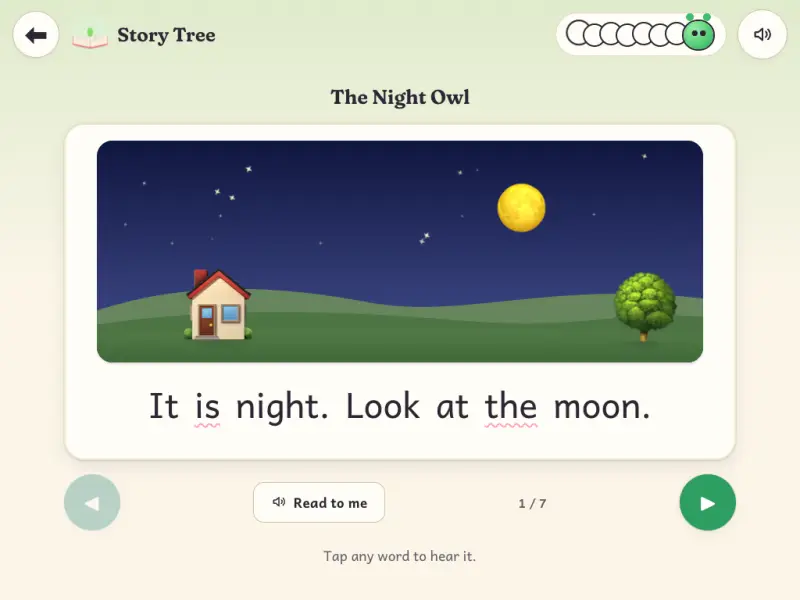
Pompom Kids has 18 illustrated story books and reading games for children aged 4 to 10. Children can read alone, tap any word to hear it, or press Read to me to listen. After each book a few questions check that they understood the story, not just decoded the words.
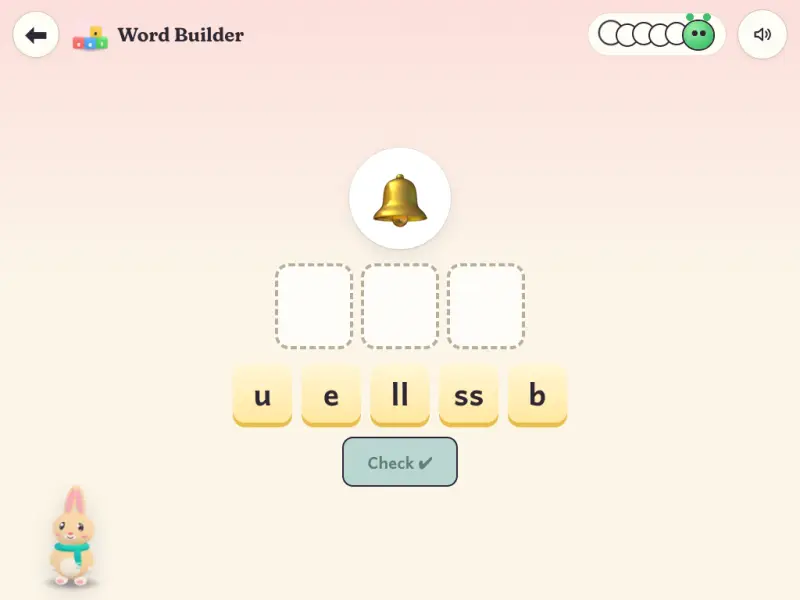
The early books are decodable: written for one phonics level, so every word uses sounds the child has already learned. As children grow, the books get longer, the questions ask them to infer, predict and explain, and Word Workshop builds the spelling, grammar and punctuation of the Key Stage 2 curriculum.
The books
Decodable books (Reception to Year 2)
Matched to the phonics sequence: a child only meets the books they can decode.
- The Big Red Bus · phonics level 6 · Reception
- The Dolphin Trip · phonics level 17 · Year 1, Year 2
- Fish and Chips · phonics level 9 · Reception, Year 1
- The Fun Fair · phonics level 13 · Year 1
- The Greedy Gull · phonics level 15 · Year 1, Year 2
- Jake’s Kite · phonics level 19 · Year 1, Year 2
- Max and the Fox · phonics level 7 · Reception, Year 1
- The Night Owl · phonics level 12 · Reception, Year 1
- The Pink Sail · phonics level 10 · Reception, Year 1
- Pip the Cat · phonics level 3 · Reception
- Sam and Dad Dig · phonics level 5 · Reception
- Snail’s Big Trip · phonics level 14 · Year 1
Reading books (Year 1 to Year 5)
- The Map in the Attic · Year 4, Year 5
- How Bees Make Honey · Year 2, Year 3
- The Lighthouse Cat · Year 3, Year 4
- The Night Bus · Year 3, Year 4
- How Seeds Travel · Year 2, Year 3
- Volcano Island Diary · Year 4, Year 5
Story Tree: books to read and talk about
Story Tree games practise reading for meaning: understanding captions and sentences, putting events in order, and talking about stories.

Yes or No?
Reading: comprehension of decodable sentences · Reception to Year 2 (ages 4 to 7) · Free
A sentence-level reading check: read a decodable question (some are silly!) and answer yes or no. Every word is decodable or a taught tricky word.
What it practises in each year
- Reception: Read simple decodable questions (Can a cat nap?) using Phase 2–3 GPCs and tricky words, and show understanding with yes or no (ELG: read aloud simple sentences consistent with phonic knowledge).
- Year 1: Read questions with adjacent consonants, digraphs and tricky words, and check that the sentence makes sense (NC Y1: check that the text makes sense while reading).
- Year 2: Read longer questions with Phase 5 spellings fluently and answer from general knowledge, spotting silly ones (NC Y2: check that text makes sense, read accurately without overt sounding).

Caption Match
Reading: comprehension of decodable captions · Reception to Year 1 (ages 4 to 6) · Members
Reading for meaning at phrase level: every word counts, because the wrong pictures change just one detail (who, where, how many or how big).
What it practises in each year
- Reception: Read a short decodable caption (a big pig in a box) and choose the picture that matches every word, where the others differ by one detail (ELG: read aloud simple phrases consistent with phonic knowledge).
- Year 1: Read longer captions with blends and position words (three ducks under a bus, a cat and a frog next to a tent) and match every detail (NC Y1: read accurately and check the text makes sense).
Story Order
Reading: comprehension (sequencing) · Reception to Year 2 (ages 4 to 7) · Members
Put the pictures of a little story in order. Retelling in sequence builds comprehension and story language.
What it practises in each year
- Reception: Listen to a short story and put three pictures in order (EYFS ELG Comprehension: retell stories).
- Year 1: Read decodable captions and put four events of a story in order (KS1 reading: discuss the sequence of events).
- Year 2: Order four events and retell them with first, next, then and finally (KS1: sequencing with time words).
Word Workshop: spelling, grammar and punctuation
Word Workshop covers the spelling, vocabulary, grammar and punctuation of the National Curriculum, from capital letters in Year 1 to prefixes, suffixes and homophones in Years 3 to 5.
Punctuation Pop
Grammar: punctuation · Year 1 to Year 3 (ages 5 to 8) · Free
Pop the bubble with the right end mark, tap in list commas, and spot where speech marks go. Each sentence can be heard aloud.
What it practises in each year
- Year 1: Punctuate sentences with a full stop, question mark or exclamation mark (NC Y1).
- Year 2: Use full stops, question marks and exclamation marks (What…! How…!) and commas to separate items in a list (NC Y2).
- Year 3: Use and punctuate direct speech with inverted commas, alongside end punctuation and list commas (NC Y3).
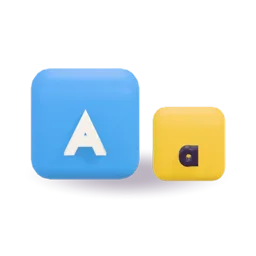
Capital Catcher
Grammar: capital letters · Year 1 to Year 2 (ages 5 to 7) · Members
Tap each word that needs a capital letter; it grows one as you tap. Then see the sentence written correctly.
What it practises in each year
- Year 1: Use a capital letter to start a sentence, for names, for the days of the week and for the pronoun I (NC Y1).
- Year 2: Use capital letters for sentence starts, names, I, days, months and places (proper nouns) (NC Y2).
Word Sorter
Grammar: word classes · Year 2 to Year 5 (ages 6 to 10) · Members
Tap a word, then the box for its word class. Two misses and the right box glows with a reminder of what that class does.
What it practises in each year
- Year 2: Identify nouns, verbs and adjectives in a sentence (NC Y2 word classes).
- Year 3: Sort nouns, verbs, adjectives and adverbs, including adverbs of time and manner (NC Y3).
- Year 4: Identify pronouns and determiners alongside nouns, verbs, adjectives and adverbs (NC Y4).
- Year 5: Identify modal verbs and relative pronouns (who, which, whose) among all word classes (NC Y5).
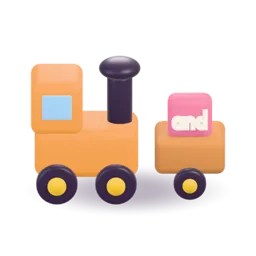
Joining Words
Grammar: conjunctions and adverbials · Year 2 to Year 4 (ages 6 to 9) · Members
Couple two train carriages with the joining word that makes sense, then hear the whole sentence. Year 4 adds the comma after a fronted adverbial.
What it practises in each year
- Year 2: Join clauses with and, but, or (coordination) and because, when, if, that (subordination) (NC Y2).
- Year 3: Express time, place and cause with conjunctions such as while, before, after, where, so and although (NC Y3).
- Year 4: Use fronted adverbials followed by a comma, and choose conjunctions to join clauses (NC Y4).
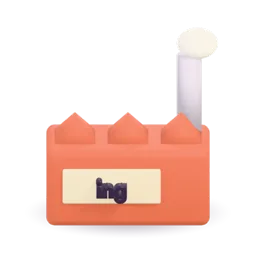
Suffix Factory
Spelling: suffixes · Year 1 to Year 4 (ages 5 to 9) · Members
A root word rides into the machine and gets an ending. Which spelling comes out? Wrong choices are the classic slips (hoping/hopping, cryed, invension).
What it practises in each year
- Year 1: Add -s, -es, -ing, -ed, -er and -est where no change is needed to the root word (NC Y1).
- Year 2: Add suffixes by doubling, dropping e or changing y to i, and add -ful, -less, -ment, -ness and -ly (NC Y2).
- Year 3: Spell words ending -ation and -ous, and add -ly to words ending le, ic and y (NC Y3–4).
- Year 4: Choose between -tion, -sion, -ssion and -cian for the "shun" ending, and spell harder -ous words (NC Y3–4).
Homophone Hunt
Spelling: homophones · Year 2 to Year 5 (ages 6 to 10) · Free
Homophones sound the same, so the sentence is read aloud and the meaning decides. Choose the spelling that fits.
What it practises in each year
- Year 2: Distinguish between homophones and near-homophones such as there/their/they’re, to/too/two and see/sea (NC Y2).
- Year 3: Spell homophones from the Y3–4 list such as break/brake, meet/meat and piece/peace (NC Y3).
- Year 4: Choose correctly between trickier homophones such as accept/except, affect/effect and whose/who’s (NC Y4).
- Year 5: Distinguish Y5–6 homophones such as aisle/isle, past/passed, stationary/stationery and principal/principle (NC Y5).
Spelling Hive
Spelling: statutory word lists · Year 1 to Year 5 (ages 5 to 10) · Free
Look, Say, Cover, Write, Check with the statutory spelling lists. Wrong letters are shown in red to fix; after two tries the word is modelled. Every word fills a honeycomb cell.
What it practises in each year
- Year 1: Spell the Y1 common exception words and the days of the week (NC Y1).
- Year 2: Spell the Y2 common exception words, e.g. because, children, people (NC Y2).
- Year 3: Spell words from the Y3–4 statutory list, starting with the shorter ones (e.g. answer, believe, heart) (NC Y3).
- Year 4: Spell the longer words from the Y3–4 statutory list (e.g. different, February, separate) (NC Y4).
- Year 5: Spell words from the Y5–6 statutory list (e.g. necessary, rhythm, neighbour) (NC Y5).

Shades of Meaning
Vocabulary: synonyms and word choice · Year 3 to Year 5 (ages 7 to 10) · Members
Climb the word thermometer from the weakest word to the strongest, and pick the word that fits the clue in a sentence.
What it practises in each year
- Year 3: Order three related words by strength (warm, hot, scorching) to build vocabulary for writing.
- Year 4: Order four words by intensity and choose the most precise word for a sentence from its context.
- Year 5: Grade four or five words along a scale, including frequency and possibility (never…always, impossible…certain), and choose precise vocabulary (NC Y5).
Prefix Power
Spelling and vocabulary: prefixes · Year 3 to Year 5 (ages 7 to 10) · Members
Power up a root word by plugging in the right prefix for the meaning shown. Year 5 also says what each prefix means.
What it practises in each year
- Year 3: Use the prefixes un-, dis-, mis-, re- and pre- to make words with new or opposite meanings (NC Y3–4).
- Year 4: Choose between in-, im-, il- and ir-, and use sub-, inter-, super-, anti- and auto- (NC Y3–4).
- Year 5: Apply all these prefixes to harder words and explain what each prefix means (NC Y5–6 morphology).
Try Pompom Kids free
A free parent account opens 23 games and the free story books straight away, with no adverts and no in-game purchases. A family membership unlocks all 58 games and 18 books for every child in the family.
More about what children learn: Phonics · Maths · UK curriculum · Parent guides