Phonics games for Reception children: what to look for
A good phonics game for a four- or five-year-old does what school does, in the same order, in small steps. A bad one teaches letter names when school uses sounds, says “cuh” instead of “c”, or asks a child to read words they have not been taught to decode. Here is what to look for.
Five things that make a phonics game good for Reception
- It follows a systematic synthetic phonics order (s a t p, i n m d, …), and lets you set where your child is, so it never jumps ahead of school.
- It says sounds purely. Listen for “mmm” and “sss”, not “muh” and “suh”. Clean sounds make blending possible.
- It only uses decodable words for reading, plus tricky words your child has already met.
- It asks your child to blend and segment, not just to tap the right letter. Hearing a word, building it, and reading it back is the core skill.
- It is short, spoken and kind. Four-year-olds cannot read instructions, and mistakes should lead to another try, not a fail screen or a timer.
Phonics games without a screen
- Robot talk: “Pass me the c-u-p.” Your child blends the sounds in their head.
- Sound bag: fill a bag with objects that start with the week’s sounds and take turns pulling one out and saying its first sound.
- Silly soup: stir a pot and add things that start with the same sound: “a sock, a sausage, a sun…”
- Word ladders: with letter cards, change one sound at a time: sat → pat → pit → pin.
Pompom Kids phonics games for Reception
All 12 of these are set to your child’s phonics level, spoken aloud with pure sounds, and never timed.
- Rhyme Time Free: Recognise and supply rhymes before and alongside Phase 2 letters.
- Same Sound Snap: Isolate the initial sound in a spoken word, ready to match it to a letter.
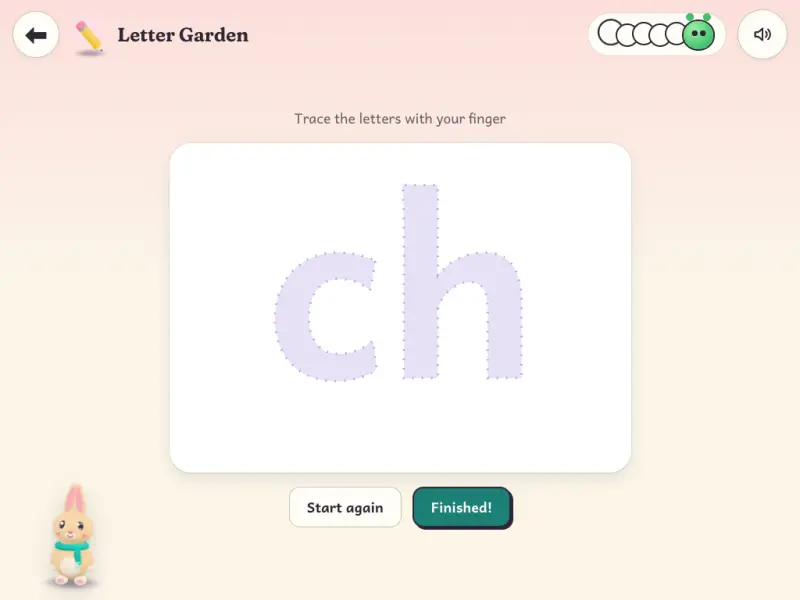
- Letter Garden Free: Learn each new Phase 2–3 GPC in teaching order; form the letter correctly.
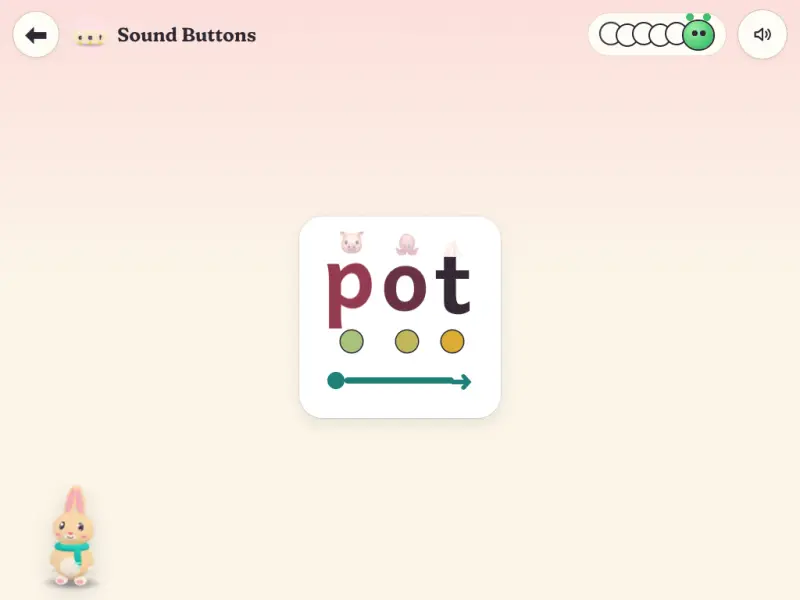
- Sound Buttons Free: Blend sounds in CVC words using only taught GPCs (ELG: Word Reading).
- Word Builder: Segment CVC words into sounds and choose a grapheme for each.
- Tricky Word Pop: Read the Phase 2–3 tricky words (the, to, I, no, go…).
- Robot Talk Free: Orally blend CVC and four-sound words (adjacent consonants), choosing between pictures that share sounds — ready for reading words (ELG: Word Reading).
- Sound Pairs Free: Match each taught Phase 2–3 grapheme to its sound picture, remembering where cards are (ELG: say a sound for each letter and some digraphs).
- Alphabet Train: Say the names of lower-case letters and find the missing letter in a run of the alphabet, a to z.
- Sound Fishing: Find a taught letter or digraph inside short decodable words (6 fish, 2–3 to catch), reading each word to check (ELG: Word Reading).
- Syllable Drum Free: Split spoken words of up to four syllables into beats, ready for oral segmenting (Phase 1 aspect 7).
- Silly Soup: Find two or three words that share a first sound from six pictures, ready to link sounds to letters (Phase 1 aspect 5).
Next: how to practise Phase 2 phonics at home.
Questions parents ask
Are phonics apps good for Reception children?
They can be, as long as they follow the same systematic synthetic phonics order as school, say sounds purely and only ask children to read words they can decode. Use them for short practice alongside reading real books together, not instead of it.
How much screen time is right for phonics practice?
For a four- or five-year-old, ten to fifteen minutes is enough for phonics practice. Pompom Kids lets grown-ups set a session length and shows a break screen when time is up.